



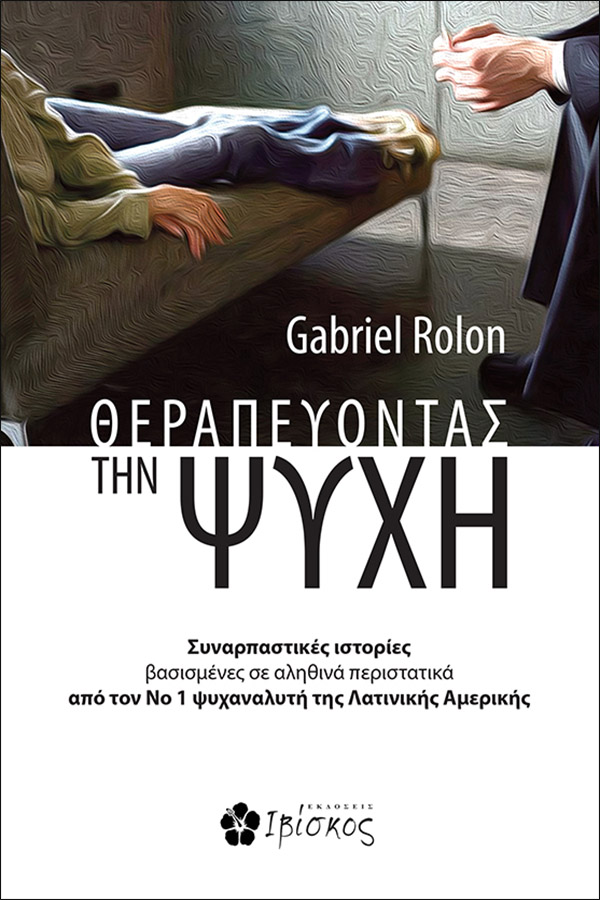
Healing the Soul
Original price was: 15.50 €.13.95 €Current price is: 13.95 €.
Κωδικός προϊόντος: 9786185505127
Δες πώς θα διαβάσεις το e-book σου
The psychoanalytic process can be described as a sequence of words that intersect with the patient’s pain—words which, with the necessary desire, clarity, and courage, can lead to the revelation of a truth capable of changing a person’s life forever, as Gabriel Rolón writes in the introduction to his book.
From pain to truth. A path undoubtedly complex, difficult, and burdened with suffering. Yet, when approached in the right way, it rewards you with the deep satisfaction that comes from knowing the journey was worth it. Anxiety, fears, questions around sexuality, family bonds, emotional connections, work, love and its absence, addictions, the passage of time, and loneliness—all are part of this path.
But so are transcendence, growth, and the realization that change toward the better is possible.
This is where Healing the Soul comes in: a vital book that begins with psychoanalysis and brings forward a relationship of trust between the one who speaks and the one who listens, guides, and accompanies. As in Historias de diván, Gabriel Rolón’s first book, these are “true stories.” Often harsh, yes—but always full of life. Deeply alive.
Excerpts from the Book
It is shocking to have an abused woman sitting in front of me. And it is not common for someone to arrive at a first session with such intense anguish and such a powerful request. Luciana believed she deserved to be punished for her cruelty and wanted me to help her stop being who she was. And this plea came from the depths of her soul.
FROM THE SECOND CASE: LUCIANA
It is strange to have in front of you a person overwhelmed by anxiety and, despite having lived this experience so many times, I still feel unable to describe the emotions it provokes. It is an indescribable experience, impossible to convey—one that fills the room with a heavy and deceptive silence. Because, in reality, it is a silence full of sound.
FROM THE THIRD CASE: RODOLFO
“Rocío, I just want to ask you one question. Are you a virgin?”
Now something in her voice, in her expression, reveals that she is unsettled. She takes her time before answering.
“I don’t know.”
The answer surprises me. I expected a “yes” or a “no,” but not “I don’t know.” Wrong. We must never think on behalf of the patient or assume anything. Each person is a story—wonderful and unimaginable.
FROM THE FOURTH CASE: ROCÍO
Additional information
| Σελίδες | 296 |
|---|---|
| Σχήμα | 14Χ21 |
Only logged in customers who have purchased this product may leave a review.

Αξιολογήσεις
There are no reviews yet.