
Γράφει το PatrisNews για το νέο βιβλίο της Νικολίνας Δανιηλίδου
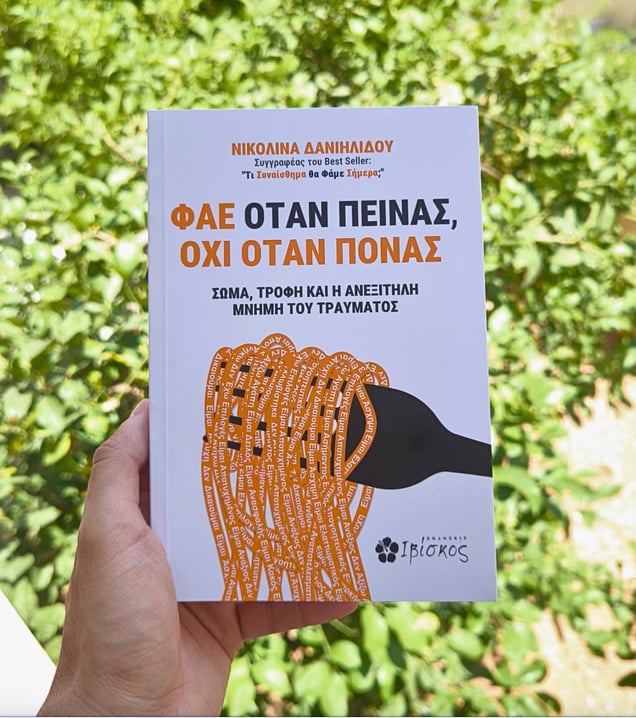
Το βιβλίο «Φάε Όταν Πεινάς, Όχι Όταν Πονάς» της ψυχολόγου Νικολίνας Δανιηλίδου, κυκλοφορεί από τις εκδόσεις «Ιβίσκος», κι έρχεται να φωτίσει αυτό το αθέατο –και βαθιά ανθρώπινο– κομμάτι της σχέσης μας με την τροφή.
Πόσες φορές στρέφεσαι στο φαγητό όταν πονάς ψυχικά – κι όχι όταν πεινάς σωματικά; Πόσες φορές η τροφή λειτουργεί ως παρηγοριά, καταφύγιο ή αποδιοπομπαίος τράγος, όταν αυτό που πραγματικά λείπει δεν είναι θερμίδες αλλά συναισθητική ασφάλεια;
Το βιβλίο «Φάε Όταν Πεινάς, Όχι Όταν Πονάς» της ψυχολόγου Νικολίνας Δανιηλίδου, κυκλοφορεί από τις εκδόσεις «Ιβίσκος», κι έρχεται να φωτίσει αυτό το αθέατο –και βαθιά ανθρώπινο– κομμάτι της σχέσης μας με την τροφή.
Πρόκειται για ένα ξεχωριστό ανάγνωσμα που δεν αρκείται στο να προσφέρει διατροφικές οδηγίες ή επιφανειακές λύσεις. Αντίθετα, ανοίγει μια απαραίτητη συζήτηση για τη σύνδεση μεταξύ συναισθηματικού πόνου, τραύματος και υπερφαγίας.Το βασικό επιχείρημα της συγγραφέως είναι σαφές και αιχμηρό: «Όταν η αιτία είναι βαθύτερη, τότε η σχέση σου με την τροφή δεν αφορά την τροφή.» Το φαγητό σε τέτοιες περιπτώσεις δεν είναι απλώς καύσιμο – είναι έκφραση. Είναι σύμπτωμα. Και όταν προσπαθείς να λύσεις το σύμπτωμα χωρίς να έχεις δει τη ρίζα, απλώς ανακυκλώνεις τον φαύλο κύκλο.
Η Νικολίνα Δανιηλίδου δεν μιλά θεωρητικά. Με σπουδές Ψυχολογίας, μεταπτυχιακή εξειδίκευση στην Ψυχολογία της Υγείας και εκπαίδευση σε σύγχρονες θεραπευτικές προσεγγίσεις όπως το EMDR και η Σχηματική Θεραπεία, έχει εργαστεί επί δύο δεκαετίες με ανθρώπους που παλεύουν με διατροφικές διαταραχές και συναισθηματική υπερφαγία. Το βιβλίο της είναι καρπός αυτής της εμπειρίας – και της προσωπικής της παρατήρησης πως η τροφή, για πολλούς, είναι ένας τρόπος να αντέξουν, να ξεχάσουν ή να αναισθητοποιήσουν τον ψυχικό πόνο.
Το «Φάε Όταν Πεινάς, Όχι Όταν Πονάς» απευθύνεται σε όσους έχουν δοκιμάσει ξανά και ξανά να αλλάξουν τις διατροφικές τους συνήθειες χωρίς αποτέλεσμα. Σε όσους νιώθουν ότι κάτι πιο βαθύ «σαμποτάρει» την προσπάθεια. Και κυρίως, σε όσους είναι έτοιμοι να δουν πίσω από το πιάτο – και να κατανοήσουν τι είναι αυτό που πραγματικά προσπαθούν να «καταπιούν».
Η γραφή της Δανιηλίδου είναι κατανοητή αλλά όχι απλοϊκή, επιστημονική αλλά με ενσυναίσθηση. Δεν χαϊδεύει αυτιά, ούτε μοιράζει εύκολες λύσεις. Αντί γι’ αυτό, προσφέρει έναν καθρέφτη – και μια ευκαιρία για πραγματική αλλαγή.
Σε μια εποχή που οι συμβουλές για «υγιεινή διατροφή» περισσεύουν, αλλά η ψυχική κατανόηση της σχέσης μας με την τροφή απουσιάζει, το βιβλίο αυτό είναι όχι απλώς χρήσιμο, αλλά απαραίτητο.
Διαβάστε το. Όχι για να χάσετε κιλά. Αλλά για να κερδίσετε ουσιαστική επαφή με τον εαυτό σας.
Πηγή: Patrisnews